
History
A hundredand thirtyyears.
Biorhythm theory is older than it looks. It began with two doctors in the 1890s, became a craze in the 1970s, and was tested in the decades after. Here is the short version.

01 · The beginnings
Two doctors. Then a third cycle.
All three are counted from the day of birth. Their lengths have not changed since the people who first described them.
23
Physical
Fliess called it male
28
Emotional
Fliess called it female
33
Intellectual
Teltscher, in the 1920s
1890s
Fliess proposes two cycles
Wilhelm Fliess, a Berlin ear, nose and throat specialist and a close friend of Sigmund Freud, proposes that life runs on a 23-day and a 28-day cycle counted from birth, and builds an elaborate numerology on them.
1904
Swoboda arrives at the same periods
Hermann Swoboda, a professor of psychology at the University of Vienna, reports the same two cycles from his own observations of patients, and makes the first slide rule for finding where a person stands in each.
1920s
The 33-day intellectual cycle
Alfred Teltscher, an engineering teacher in Innsbruck, reports that his students' performance rises and falls on a 33-day period. The three cycles of modern biorhythm theory are in place.
02 · The craze
For a few years, it was everywhere.
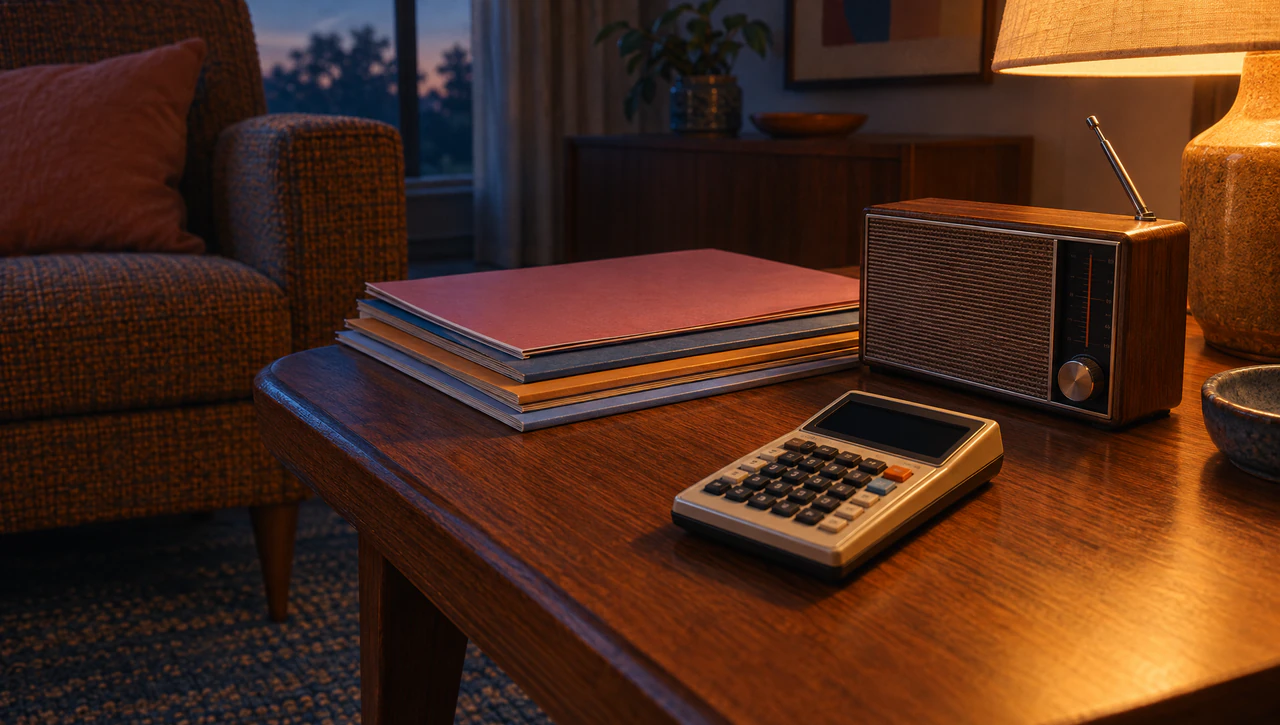
Books, newspaper charts, trials in airlines and factories, then a calculator small enough for a pocket.
1964
Is This Your Day?
George Thommen's book brings the theory to a wide public; the 1973 edition sells through the decade.
1975
A Personal Science
Bernard Gittelson's Biorhythm: A Personal Science sells in the millions. Newspapers print charts; airlines and factories run trials.
1976
The calculators
Casio's Biolator and Kosmos's biorhythm calculator put the counting in a pocket. One of the Kosmos calculators begins the story of BioCalendar.

03 · The verdict
The studies found no effect.
134
studies, reviewed in 1998
1970s to 1980s
The theory is tested
Researchers check the cycles against accidents, sporting results, exam marks and deaths. The studies find no effect.
1998
The review
Terence Hines goes through 134 studies in Psychological Reports and concludes that the theory is not valid. What the evidence says.

04 · Still here
The arithmetic stayed. The claim did not.
The theory survives the way horoscopes and tarot survive: as a structure people use to reflect on their days. The arithmetic is simple and the pattern is personal, counted from your own birth date, and that gives it a particular appeal as a daily ritual. BioCalendar belongs to that tradition. It counts the cycles exactly as Fliess, Swoboda and Teltscher described them, pairs them with written readings, and is honest about what that is: a prompt for self-reflection, not a forecast.
Sources
- 01Hines, T. M. (1998). Comprehensive review of biorhythm theory. Psychological Reports, 83, 19–64.
- 02Thommen, G. S. (1973). Is This Your Day? How Biorhythm Helps You Determine Your Life Cycles. Crown.
- 03Gittelson, B. (1975). Biorhythm: A Personal Science. Arco.
- 04Sulloway, F. J. (1979). Freud, Biologist of the Mind, on Fliess and the periodicity theory.
Keep reading
- Are biorhythms real?What the studies found when they tested biorhythm theory against accidents, sport, exams and deaths, why people use it anyway, and how we frame it.
- What is a biorhythm?A biorhythm is a cycle said to begin at birth and repeat on a fixed period: 23 days physical, 28 emotional, 33 intellectual. The theory and the evidence.
- About Biosoft GlobalBiosoft Global makes BioCalendar. It began with one person counting three cycles by hand in 1976, and has kept the records since. Who we are.